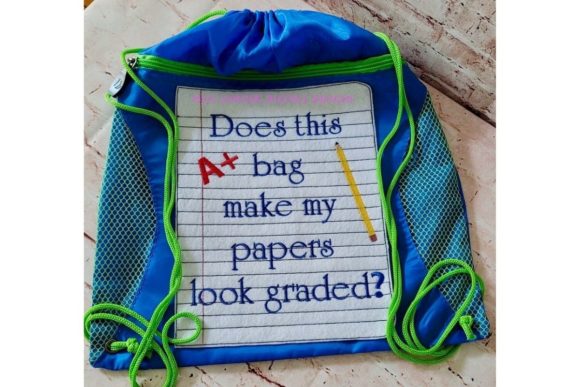
Does This Bag
A Craft Fair Designer’s Real-World Review
As an embroidery designer who’s packed, stitched, and sold at over 47 craft fairs—and built a small-batch business around teacher gifts, market-ready totes, and booth-friendly handmade products—I opened Does This Bag with one question: Will this stop someone mid-aisle? The answer? Yes—but only if you use it right. It’s not a “safe” design. It’s playful, slightly cheeky, and instantly legible—exactly what cuts through the visual noise of a bustling handmade market.
First Impression: Bold, Friendly, and Unapologetically Teacher-Centric
Does This Bag lands as modern-fun—not rustic, not minimalist, not vintage. It’s got wit without sarcasm, charm without clutter. That tone is gold for Back To School season: it speaks to educators who appreciate humor that doesn’t condescend, and to parents who want thoughtful, lighthearted appreciation—not another generic apple motif. On first glance, it feels like a conversation starter. And in a craft fair setting, where attention spans are measured in seconds, that’s your biggest asset.
Where It Shines (and Where It Stumbles)
Tote bags: Ideal. Large, flat surface. Bold lettering reads cleanly even from six feet away. Works especially well on natural canvas or medium-weight cotton duck—fabrics that hold crisp stitch definition without excessive bulk.
Aprons and tea towel embroidery: Strong secondary use—if sized correctly. At medium size (4.5–5"), it anchors the chest pocket or lower corner beautifully. Avoid tiny versions here; thread blending and fabric texture can mute clarity on terry cloth or heavy linen blends.
Embroidered patches: A smart upsell. Stitch it out clean on twill, heat-seal or sew-on, and pair with “Teacher Survival Kit” gift sets. Customers love portable, reusable value.
Caps and curved surfaces: Use caution. Lettering with tight spacing or thin strokes may distort on structured caps. Test on scrap first—and consider simplifying or adjusting kerning if stitch density spikes in narrow areas.
Pillow covers and pouches: Works best centered or top-aligned—not wrapped. Small sizes (3") risk losing legibility on textured fabrics like bouclé or thick quilting cotton. Reserve those for smooth, tightly woven substrates.
Production & Selling Practicalities
This isn’t a “set-and-forget” machine embroidery design. Its strength lies in intentionality—not automation. Here’s what matters when prepping Does This Bag for your booth or Etsy shop:
- It’s highly scannable—customers get the joke and the purpose in under two seconds. That means faster decisions, fewer questions, and stronger impulse buys near checkout.
- It scales well across sizes, but don’t assume “small” means “safe.” Tiny lettering (<3") on dark fabric or dense weaves risks vanishing. Always test contrast: light thread on navy, dark thread on ecru—both need clear pop.
- Photographs exceptionally well for digital listings. Clean lines, balanced negative space, and strong typography translate directly to printable mockups and social thumbnails—no heavy editing needed.
- Batch production is efficient—but only if you’ve verified hoop size compatibility across all three included sizes. Nothing kills momentum like re-hooping mid-run because the 6" version won’t fit your standard frame.
Careful-Use Notes Every Embroidery Designer Should Check
Before stitching your first Does This Bag sample:
- Scan the embroidery file for stitch density in lowercase “g” and “b”—those curves often trap thread or cause puckering on lightweight fabrics.
- Assess thread colors: does the default palette work on oatmeal linen, black denim, and kraft canvas—or will you need custom palettes per fabric group?
- Confirm stabilizer needs. High-density fills may require cutaway + tear-away combo on stretchy or unstable weaves (like some recycled poly-cotton blends).
- Test on textured towels before committing. Terry loops love to swallow fine detail—especially in the word “Bag.”
- Check licensing: since this is positioned as a commercial embroidery file, verify whether resale of finished products is permitted—and whether credit or attribution is required.
Booth Impact & Brand Alignment
In my own booth setup, Does This Bag lives front-and-center on a hanging rack of 5–7 tote variations—each in a different color, each with consistent placement and sizing. That repetition builds visual rhythm and signals quality. It also pairs effortlessly with complementary handmade products: embroidered pencils, mini chalkboard tags, or tea towel sets with matching “Does This Bag?” corner embroidery.
It elevates perceived value—not by looking expensive, but by feeling *considered*. That’s what handmade buyers pay for: intention, personality, and cohesion. When a customer picks up a tote and smiles before reading the tag, you’ve already won.
Final Thoughts for Sellers & Creative Entrepreneurs
Does This Bag isn’t just another Back To School embroidery file—it’s a micro-branding tool. It works because it’s specific, shareable, and scalable. It fits Etsy sellers building seasonal collections, boutique makers curating teacher appreciation bundles, and craft fair vendors who know that humor + utility = repeat customers.
But remember: no design sells itself. Your job is to steward it—test it, refine it, photograph it honestly, and place it where its voice resonates loudest. Run one real mockup before ordering 50 yards of canvas. Compare how it reads on light vs. dark fabric. Hold it up beside your other bestsellers and ask: Does this belong?
Yes—it does. Especially when you treat it like the versatile, audience-aware, craft-fair-tested design asset it is.