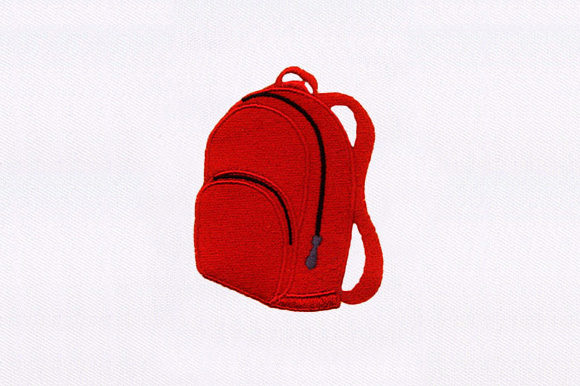
Backpack Embroidery Design
First Impression: Bold, Playful & Instantly Recognizable
As an embroidery designer who’s prepped over 200 craft fair booths in the past decade, my first thought when I see Backpack is: this is a crowd-pleaser. It reads bold—not loud, not chaotic—but confident, clean, and full of personality. It leans modern with a touch of friendly nostalgia, making it ideal for Back To School season without feeling dated or overly academic. It’s not farmhouse, not minimalist, not ornate—it’s *approachable premium*: the kind of machine embroidery design that makes shoppers pause mid-aisle, tilt their head, and say, “Oh—I need that on something.”
Where Backpack Shines on Craft Fair Products
Backpack works hardest where visibility and emotional resonance matter most. On a tote bag design, it anchors the front panel beautifully—large enough to read from six feet away, yet balanced enough not to overwhelm. As apron embroidery, centered just below the pocket, it adds instant charm and function (parents love seeing “Backpack” on a teacher’s or student’s apron). For tea towel embroidery, it holds up surprisingly well—even on textured cotton—especially when placed near the hem or corner as a subtle branding accent.
It’s also a standout as an embroidered patch: crisp, self-contained, and ready for iron-on or sew-on application. Small shop owners tell me patches with this energy sell fast at craft fairs—especially when bundled with matching pouches or keychains. As a fabric pouch centerpiece, Backpack gives handmade product packaging a polished, intentional feel. And on pillow covers or market bags, it reads as thoughtful gifting—not generic, but curated.
What Makes Backpack Sell Well—In Person & Online
This isn’t just about aesthetics—it’s about legibility and emotional pull. At a craft fair, customers scan your booth in under three seconds. Backpack delivers immediate clarity: no decoding, no squinting. Its shape and letterforms are distinct even at 3.5 inches tall. That means it photographs exceptionally well for Etsy listings and printable mockups. Bright thread colors pop against natural canvas, denim, or oatmeal linen—and it scales cleanly both up (for large tote fronts) and down (as a 2-inch accent on a cap brim or tea towel tag).
For batch production? Yes—Backpack is highly repeatable. The stitch density feels balanced: dense enough to hold definition on medium-weight fabrics, but not so heavy that it gums up stabilizer or slows down your machine. No tiny serifs, no interlocking letters, no micro-details that vanish at small sizes. That translates directly to fewer re-hooping stops, less thread breakage, and faster turnaround—critical when you’re embroidering 40+ tote bags the night before a fair.
Careful-Use Notes Every Designer Should Check
- Dense areas: While overall density is moderate, the backpack strap curves and zipper detail may require light tear-away stabilizer—even on stable cotton—to prevent puckering.
- Small lettering: The word “Backpack” uses clear, open fonts—but avoid shrinking below 1.75 inches on dark fabric; contrast loss becomes noticeable.
- Curved surfaces: On baseball caps, test the design placement carefully—center-front works best, but avoid stretching across the crown seam. A smaller version (2.25") often reads cleaner than full-size.
- Textured towels: Use cutaway + topping (like Sulky Solvy) on looped terry or waffle-weave tea towels to keep letter edges sharp.
- Dark fabric: Opt for high-contrast thread colors—navy + bright yellow, charcoal + lime, black + white outline. Avoid low-contrast combos like gray-on-charcoal.
How Backpack Elevates Your Booth & Brand
Backpack doesn’t just sit on a product—it strengthens your whole handmade product story. When stitched onto a sturdy market bag or embroidered patch set, it signals intentionality: you didn’t grab a random design—you chose one with rhythm, balance, and quiet confidence. That perception lifts perceived value, supports higher price points, and reinforces brand consistency across your small shop product line.
In your booth display, use Backpack to create visual rhythm: pair a large tote with a mini pouch and a framed patch sample. That trio tells a complete story—function, portability, and collectibility. Buyers engage more when they see how one machine embroidery design can live across multiple formats. And yes—it absolutely belongs in your commercial embroidery portfolio: schools, tutoring centers, and after-school programs consistently request clean, positive, non-gendered designs like this.
Pro Designer Checklist Before You Stitch
- Test the embroidery file on scrap fabric matching your final product (e.g., canvas for totes, terry for towels).
- Confirm thread contrast—especially if using eco-friendly or variegated threads.
- Review spacing between elements: does the backpack icon breathe comfortably beside the wordmark?
- Verify hoop size compatibility with your frame—some versions may require 5x7" or larger.
- Inspect stitch density in the strap and zipper zones—adjust underlay if needed for stability.
- Choose the right stabilizer: cutaway for stretchy knits, tear-away for stable wovens, topping for napped textures.
- Create at least one real-life finished product mockup—not digital only—before fair day.
- Compare how Backpack looks across 3–4 fabric colors (cream, navy, olive, heather gray) to guide inventory decisions.
- Confirm commercial licensing applies to your intended use—this digital embroidery file includes 15 formats (10O, ART, CND, DSB, DST, DSZ, EXP, HUS, JEF, PCS, PEC, PES, TAP, VIP, VP3, XXX), but always double-check terms before selling.
Final Thought: This Is a Workhorse With Heart
Backpack isn’t flashy—but it’s reliable, expressive, and quietly magnetic. In a sea of cutesy fonts and overworked motifs, it stands out by being *clear*, *confident*, and *craft-fair-ready*. Whether you're an Etsy seller batching 50 tea towel sets, a boutique maker embroidering custom lunch kits, or a digital seller expanding your design assets, Backpack earns its place in your core collection. It sells because it feels human-made—not mass-produced—and because it makes every craft fair product it touches look just a little more special.