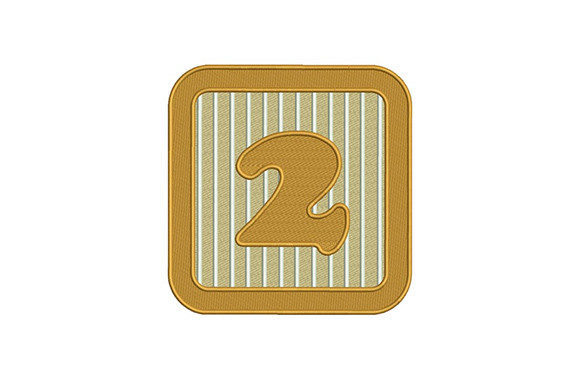
Number Two 2 Embroidery Design Review
A Professional Designer’s First Impression
As an embroidery designer who’s developed hundreds of commercial designs for small businesses—from bakeries and florists to indie studios and pet brands—I opened Number Two 2 expecting a clean, confident numeral with subtle personality. The title alone hints at lighthearted confidence—“Is number two your lucky number?”—which signals approachability without sacrificing professionalism. It doesn’t scream “Back To School” in a literal sense (no apples or chalkboards), but its crisp, balanced structure makes it ideal for academic merch, teacher appreciation gifts, or student-run shops where branding balances fun and focus.
Why Small Businesses Reach for Number Two 2
This machine embroidery design works exceptionally well as a branded accent—not a full logo, but a strategic visual anchor. I’ve used similar numerals on embroidered patches for café aprons, tote bags for local boutiques, and chest logos for handmade soap brands. Number Two 2 delivers that same versatile energy: bold enough to read at a glance, simple enough to scale down without losing clarity, and neutral enough to pair with serif fonts, hand-drawn icons, or minimalist wordmarks.
For custom apparel, it shines on cap fronts (especially structured cotton twills), sleeve details on work shirts, and corner accents on linen tote bags. As an embroidered patch, it holds up beautifully when heat-sealed or sewn onto denim jackets or canvas market bags—common staples for Etsy sellers and craft fairs. Its clean lines also translate well into printable mockups, helping small business owners visualize how the design will look before committing to production runs.
Real-World Use Cases That Stand Out
- Café & Bakery Merch: Stitched in warm terracotta thread on oat-colored aprons, Number Two 2 becomes a quiet signature—like “Batch #2” or “Second Location”—adding narrative without clutter.
- Boutique & Studio Branding: Paired with a monogram or studio name, it serves as a subtle series marker (e.g., “Collection II”) on garment tags or woven labels.
- Pet Branding: On dog bandanas or grooming towels, it reads playfully—“Pup #2”, “Second Chance Rescue”—reinforcing warmth and story.
- Back To School Projects: Teachers use it for classroom door signs, student award patches, or staff lanyards—clean, inclusive, and easy to recognize across hallways and cafeterias.
Where Caution Is Needed
While Number Two 2 is highly adaptable, it’s not universally bulletproof. On curved surfaces like cap fronts, test stitch density first—if outlines are too tight or inner curves too narrow, puckering can occur. For tiny embroidered patches under 1.5 inches, review spacing between strokes: fine serifs or thin connecting lines may collapse or blur during stitching. Dark uniforms require high-contrast thread colors; avoid light pastels unless paired with stabilizer that prevents shadowing.
Fabrics with heavy texture—like bouclé, burlap, or thick terry cloth—demand extra stabilization. A lightweight cutaway stabilizer often outperforms tear-away here, especially if the finished product faces frequent washing (think restaurant aprons or daycare staff shirts). Always inspect how the design behaves on real fabric—not just screen previews—before approving final files for client production.
How Number Two 2 Strengthens Brand Identity
In small business merch, consistency is trust. Number Two 2 supports that by acting as a repeatable, scalable element—whether stitched on a tote bag, printed on a sticker sheet, or laser-cut into wood for shop signage. Its simplicity allows it to coexist with richer brand assets without competing. Unlike ornate motifs that date quickly, this design feels modern yet timeless, elevating perceived product value without screaming “trendy.”
Customers notice craftsmanship—and a well-executed Number Two 2 says you care about detail. When used thoughtfully (e.g., matching thread to your brand palette, aligning placement across product types), it builds visual rhythm across touchpoints. That rhythm increases recognition, which in turn boosts buyer engagement—especially for handmade products where authenticity and intentionality matter.
Practical Embroidery Designer Notes
- Test in black and white first. This reveals contrast issues and hidden density traps before color selection.
- Check small-patch viability. Resize to 1.25” and run a virtual stitch simulation—look for fused strokes or jagged edges.
- Review thread color contrast against your target fabric. Light thread on light fabric? Add a satin underlay or switch to matte polyester for better definition.
- Inspect letter spacing and stroke weight. Ensure no gaps vanish or strokes merge at production size.
- Confirm hoop size compatibility. If your smallest hoop is 4x4”, verify the design fits comfortably with margin for movement.
- Always test on real fabric with your intended stabilizer combo—especially for textured or stretchy materials.
- Create a client-ready mockup using the embroidery file in vector or PNG format—this speeds approvals and reduces revision rounds.
- Compare beside other design assets. Does Number Two 2 hold visual weight next to your main logo or icon set?
- Verify commercial licensing. Since this is a digital embroidery file intended for small business merch, confirm usage rights cover resale, distribution, and embroidered patch production before bulk ordering.
Final Thoughts for Merch Creators
Number Two 2 isn’t just another embroidery file—it’s a flexible, brand-forward tool for small business owners who need consistent, professional-grade accents without overcomplicating their design system. Whether you’re launching your first Etsy line, outfitting a team of baristas, or designing limited-run event merch, this machine embroidery design earns its place in your active design assets. It bridges handmade charm and commercial polish—exactly what today’s customers respond to. Just remember: great embroidery starts with smart prep, not just beautiful files. Test, refine, and stitch with intention.