Bold Number 4: A Smart Embroidery Choice for Small Business Branding
First Impression: Clean, Confident, and Commercially Ready
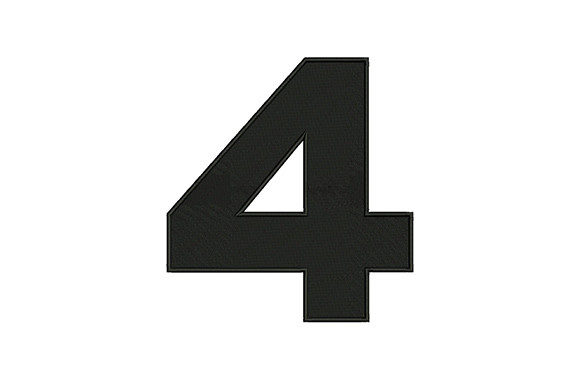
As an embroidery designer who’s developed hundreds of designs for small business merch—cafés, florists, bakeries, pet brands, and creative studios—I opened Bold Number 4 expecting simplicity with intention. And it delivers. The title says it all: this isn’t a decorative flourish or a whimsical script—it’s a strong, centered, confident numeral built for visibility and versatility. It reads as modern and professional, yet warm enough for handmade product labels or boutique tote bags. There’s no ornate shadow, no excessive outline, no distracting embellishment—just clear visual weight and balanced proportions. That makes Bold Number 4 instantly adaptable across Back To School apparel (think teacher tote bags or student cap accents), seasonal pop-up merch, and year-round brand assets.
Real-World Performance Across Business Touchpoints
In my studio, I test every machine embroidery design not just for stitch quality—but for how it holds up in the hands of real customers and staff. Bold Number 4 shines where clarity matters most: on embroidered patches for aprons and uniforms, chest logos for work shirts, front-cap embroidery for team-branded headwear, and minimalist sleeve details on crewneck tees. Its clean geometry translates beautifully to tote bag design—especially when stitched in high-contrast thread colors against natural canvas or cotton duck. I’ve used it as a subtle but memorable accent on bakery packaging tags, floral shop gift wrap seals, and even pet brand bandanas—all without losing legibility or brand cohesion.
For Etsy sellers and craft businesses, Bold Number 4 is a quiet powerhouse. It pairs seamlessly with hand-lettered logos or custom monograms, serving as a numeric anchor—say, “Est. 2024” on a boutique’s launch collection or “Batch #4” on artisan soap labels. As a digital embroidery file, it scales reliably for both large-format tote applications and smaller placements like pocket flaps or tag corners. Because it’s simple by design, it avoids the common pitfalls of overcrowded stitch density or fragile fine lines—making it ideal for commercial embroidery runs where consistency and durability are non-negotiable.
Where to Use Bold Number 4 Thoughtfully
Even strong designs have boundaries—and knowing them protects your brand and your bottom line. While Bold Number 4 performs well across fabric types, exercise caution on highly textured surfaces (like bouclé knits or heavy burlap) unless you pair it with appropriate stabilizer. On dark uniforms or navy caps, always test thread color contrast first—white or neon yellow may read better than light grey. For cap embroidery, avoid placing it too close to the curve of the crown; its bold shape benefits from flat, stable real estate. And if you’re planning sub-1.5-inch embroidered patches, run a physical test: does the number retain crisp edges and even fill? Some simplification may be needed at tiny sizes—not because the design fails, but because fabric behavior and needle tension demand respect.
Brand Identity & Customer Trust: More Than Just a Number
Here’s what small business owners often overlook: a single numeral can reinforce trust. When Bold Number 4 appears on a café’s staff apron, it subtly signals precision—“We measure carefully. We batch thoughtfully.” On a florist’s reusable tote, it evokes seasonality (“Spring Collection #4”) or local pride (“Downtown District #4”). That kind of quiet storytelling builds recognition without shouting. It supports visual consistency across your design assets—whether you’re pairing it with your primary logo or using it solo on packaging. And because it feels intentional—not generic—it elevates perceived product value. Customers don’t just see a number; they sense care, craft, and continuity.
Practical Designer Notes for Flawless Execution
Before committing Bold Number 4 to production, follow these field-tested steps:
- Test in black and white first—to confirm contrast and silhouette integrity across thread colors;
- Check minimum viable size—run a 1.25” version on your target fabric to assess edge definition;
- Review spacing and kerning—especially if pairing with letters (e.g., “Team #4” or “Class of ’24”);
- Confirm hoop size compatibility—a simple design shouldn’t require oversized hoops, but verify before digitizing adjustments;
- Use cutaway or medium-weight tear-away stabilizer, depending on fabric texture and garment use;
- Always stitch a physical mockup before client approval—digital previews lie, fabric tells the truth;
- Compare it beside your other design assets—does it harmonize with your logo weight, font hierarchy, and brand palette?
- Verify commercial licensing—since this is intended for small business merch and branded patch use, ensure your purchase includes rights for resale and promotional distribution.
Remember: Bold Number 4 isn’t just another embroidery file. It’s a flexible, scalable, and trustworthy element in your branding toolkit—one that works as hard as you do. Whether you’re launching a new product line, refreshing staff uniforms, or designing limited-edition Back To School merch, this machine embroidery design earns its place through clarity, consistency, and quiet confidence. Use it intentionally, test it thoroughly, and let it speak volumes—without saying a word.