Book Worm: A Charming Embroidery Design for Small Business Branding
First Impression: Playful, Approachable, and Thoughtfully Crafted
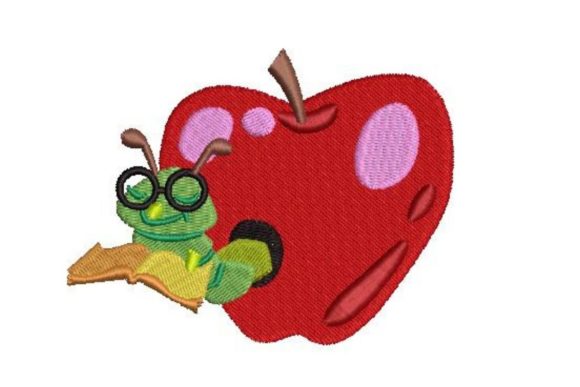
As an embroidery designer who’s digitized and stitched hundreds of commercial designs for small businesses—from indie bookshops to children’s boutiques—I immediately recognized Book Worm as more than just a cute motif. Its concept—an apple with a worm reading a book—carries instant narrative warmth and intellectual charm. It reads as friendly, clever, and handmade—not overly polished or corporate, but never childish in a limiting way. That balance is rare. For businesses leaning into literacy, education, creativity, or gentle whimsy—like a local library café, a children’s bookstore, a homeschool co-op supply shop, or a boutique stationery brand—Book Worm feels like a natural visual extension of voice and values.
Real-World Performance Across Merchandise Types
In practice, Book Worm shines across multiple small business merch applications. As an embroidered patch, it holds up beautifully on denim jackets, canvas tote bags, and staff aprons—especially when stitched with high-contrast thread colors (think forest green apple + cream worm + navy book cover). On cap embroidery, it works best centered on the front panel or subtly on the side seam—its compact composition avoids distortion, and its rounded elements flow naturally over curved surfaces. For custom apparel like staff tees or work shirts, Book Worm serves equally well as a chest logo or sleeve accent, offering visual interest without overwhelming the garment.
It also excels as a branded touchpoint beyond apparel: think embroidered labels on handmade product packaging, subtle accents on reusable shopping bags, or even as a stitched detail on gift tags and craft kits. Because it evokes learning and curiosity, Book Worm aligns especially well with Back To School campaigns—but its appeal isn’t seasonal. A florist using it on aprons or a pet brand incorporating it into “Read to Your Pet” event merch adds unexpected depth and memorability.
Where to Use Book Worm With Intention
Like any strong machine embroidery design, Book Worm performs best when matched thoughtfully to context. Avoid shrinking it below 2.5 inches wide—tiny versions risk losing definition in the worm’s expression or the book’s spine detail. On dark uniforms or textured fabrics (like heavy canvas or corduroy), confirm that stitch density allows clean fill coverage; dense fills may pucker if stabilizer isn’t properly selected. Also test how the apple’s curvature reads on highly contoured surfaces—like cap fronts or curved tote bag panels—where distortion can flatten key outlines.
Because the design includes fine line work (the worm’s segmented body, the book’s pages), avoid ultra-fine thread or low-stitch-count digitizing unless you’re targeting a deliberately rustic, hand-drawn aesthetic. And while the charm lies in its detail, remember: frequent washing impacts longevity. Recommend clients use quality stabilizer and reinforce high-wear zones—especially on aprons and tote bags where stitching endures friction.
Brand Identity & Customer Connection
Book Worm doesn’t just decorate—it communicates. Its quiet intelligence builds trust with customers who value authenticity and storytelling. When a local bakery uses it on staff aprons alongside a “Books & Biscuits” pop-up, it signals community, care, and curation—not just commerce. That emotional resonance lifts perceived product value and encourages repeat engagement. Visually, it supports consistency: whether stitched on a tote, printed on a mockup, or used as a digital watermark on social posts, Book Worm becomes a recognizable anchor in your design assets.
For Etsy sellers and handmade brands, this kind of cohesive, story-driven digital embroidery file strengthens positioning. Buyers don’t just purchase a design—they invest in a ready-made piece of brand language. Paired with thoughtful typography and color palettes, Book Worm helps small businesses stand out in crowded markets without shouting.
Practical Designer Notes Before Production
Before committing to bulk runs, always run these checks:
- Test in black and white first—to assess contrast, clarity, and negative space balance;
- Verify minimum viable size—stitch a 2-inch and 3-inch version side by side on your target fabric;
- Review thread color contrast—especially between apple, worm, and book elements—on both light and dark substrates;
- Inspect spacing and underlay—tight curves (like the apple stem or worm’s curl) need solid underlay to prevent gapping;
- Confirm hoop size compatibility—does it fit comfortably within your standard hoops without re-hooping mid-stitch?
- Test on real fabric—not just tear-away stabilizer swatches, but actual garment-weight cotton, canvas, or twill;
- Create a printable mockup for client approval—show Book Worm scaled and placed on a realistic tote or cap silhouette;
- Compare beside existing design assets—does it complement your logo, fonts, and other icons—or compete for attention?
- Confirm commercial licensing—this is non-negotiable for small business merch. Ensure your embroidery file permits resale, branding, and derivative use.
Finally, remember: Book Worm isn’t just about reading—it’s about inviting connection. Whether stitched onto a teacher’s tote, a librarian’s cap, or a boutique’s return bag, it quietly says, “We value curiosity, care, and craft.” That message resonates far beyond the Embroidery category—it lands in hearts, not just on fabric.