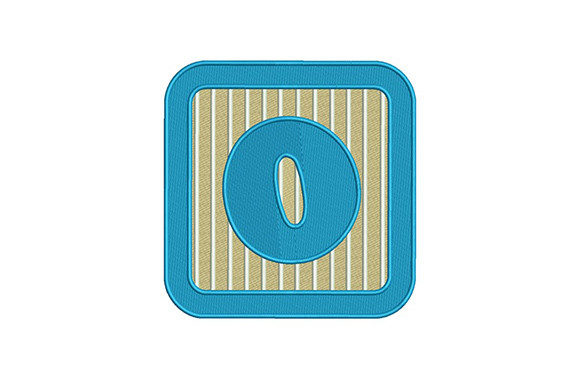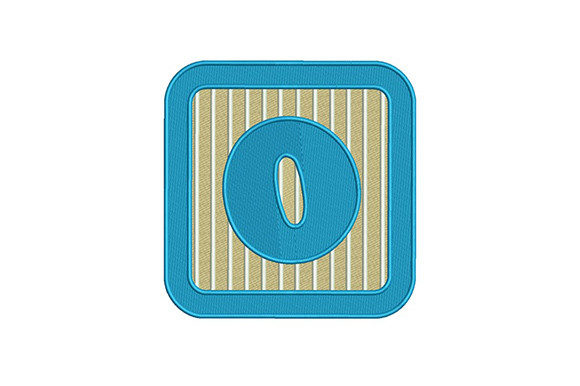
Number 0 Charm: A Quietly Confident Embroidery Staple
As someone who’s stitched hundreds of designs across apparel, nursery goods, and boutique merchandise—most recently a batch of custom “First Day of Kindergarten” tote bags—I opened Number 0 Charm expecting simplicity. What I found wasn’t just minimal; it was thoughtfully restrained. It doesn’t shout. It invites. That quiet confidence is exactly why it works so well in real projects—not as a centerpiece demanding attention, but as a subtle, meaningful accent that feels intentional and handmade.
First Impressions: Light, Legible, and Gently Playful
The shape is clean—a rounded, slightly softened zero with gentle curves and no sharp angles or interior cutouts. There’s no extra decoration, no shadowing, no faux-3D effect. Just smooth outlines and balanced negative space. It reads instantly as “zero,” not “O” or “Q,” thanks to consistent stroke weight and open proportions. That clarity matters—especially when stitching on baby onesies or toddler sweatshirts where tiny details vanish under thread tension or fabric nap.
It leans into the Back To School category without leaning too hard: no apples, no pencils, no chalkboard textures. Instead, it supports themes like “Class of 2030,” “Zero Stress Zone,” or “My First 0-Day.” I used it alongside a soft script “Kindergarten Bound” on a cream cotton tote—stitched in pale mint thread—and the contrast between the crisp zero and flowing text created visual rhythm without competition.
Where It Shines (and Where It Asks for Care)
Stitches cleanly on stable fabrics: On medium-weight cotton tees, twill tote bags, and linen tea towels, Number 0 Charm holds its shape beautifully. The stitch density feels moderate—not so sparse it looks thin, not so dense it balloons or puckers. Satin stitch edges stay smooth; fill stitches lay flat with no visible gaps or thread nesting.
Works double-duty as applique or standalone: Though not labeled an applique design, its clean outline makes it easy to adapt—cut a fabric circle first, then stitch the zero over it for a layered look on a denim apron or patch. I tested it that way on a chambray cap, and the result felt elevated, not crafty.
Small hoop friendly—but test before committing: At under 3 inches wide (exact size depends on your file version), it fits standard 4x4 hoops comfortably. But don’t assume it’ll behave the same on textured fleece or stretchy jersey. On a ribbed baby blanket swatch, I noticed slight distortion in the curve—easily fixed with tear-away + cutaway stabilizer combo, but worth checking before stitching 20 units.
Dark fabric? Yes—with caveats: On navy sweatshirts, white or light gray thread kept the zero readable, but I avoided pastels that faded into the background. Always test your thread colors on scrap fabric *under natural light*, not just screen preview. A printable mockup won’t show how fill stitch sheen catches light—or how satin edges reflect differently on matte vs. brushed surfaces.
Real-World Fit: Beyond the Hoop
This isn’t a design you’d use alone on a full chest placement—unless you’re going for bold minimalism on a monochrome tee. Its strength lies in context: as part of a set (paired with other numbers or letters), as a functional detail (“0% Sugar” on a kitchen towel), or as a gentle milestone marker (“0–3 Months” on a newborn gift set). I stitched it onto a set of organic cotton pillow covers for a pediatrician’s waiting room—each pillow featured a different number (0 through 5) in coordinated thread tones. Parents consistently commented on how “calm” and “uncluttered” they felt compared to busier nursery motifs.
For Etsy sellers and small shop owners: Number 0 Charm adds quiet professionalism to digital product listings. Include it in a “Back To School Starter Pack” alongside alphabet letters or school supply icons—and watch how it lifts perceived value. Customers trust consistency. A clean zero beside a crisp “A” and “B” signals thoughtful curation, not clip-art assembly.
Design Notes Every Embroiderer Should Check
- Always stitch a test run—not just on plain cotton, but on your actual project fabric, with your chosen stabilizer and thread.
- Review stitch density visually: Zoom in on your embroidery software. Look for areas where running stitches might be too sparse to hold shape on curved seams or high-wear zones like bag handles.
- Confirm licensing terms before using in commercial embroidery, finished products for resale, or digital embroidery files sold on your own site or platforms like Creative Market.
- Check corner integrity: Even simple shapes can fray at tight curves if stitch angles are too aggressive. Run your finger over the stitched zero—if the edge feels rough or snaggy, adjust underlay or reduce satin stitch width.
- Compare black-and-white mockups: If you’re offering multiple thread options, see how the zero reads in grayscale—it reveals contrast issues invisible on screen.
- Assess fabric texture impact: On terry cloth or heavy bouclé, even a simple zero can blur. Consider simplifying further—or switching to a bold outline-only version if your file includes alternatives.
Final Thought: Less Is Anchored, Not Empty
In a market flooded with oversized, glitter-heavy, or overly literal embroidery files, Number 0 Charm stands out by refusing to overexplain itself. It doesn’t need confetti or cartoon eyes to signal “fun.” Its versatility comes from restraint—not emptiness, but intention. When stitched well, it reads as calm competence. That’s valuable for baby embroidery, holiday embroidery, personalized gifts, and any craft business aiming for timeless over trendy.
Use it where clarity matters more than clutter. Where quiet recognition matters more than instant flash. And where your customer isn’t just buying a zero—they’re buying the feeling of something carefully considered, gently made, and quietly ready to belong.